

Walk into almost any sales training seminar and you will hear the same promise: master the framework, rehearse the pitch, and the close will follow. Scripts, rebuttal banks, and qualification ladders all have their place in a well-run business. But in trust-based industries – the kind where the customer is buying a relationship rather than a widget – that entire toolbox can quietly work against you. Buyers rarely remember your cleverest closing line. They remember whether they felt safe, heard, and genuinely cared for. The fastest route to making them feel that way is to stop performing and start being real.
What Makes an Industry “Trust-Based”
Some purchases are transactional by nature. You buy a coffee, a cable, or a coat, and the relationship ends at the checkout. Trust-based industries are different. Think of financial advising, healthcare, legal counsel, insurance, real estate, therapy, and coaching – fields in which the client hands over something far more valuable than money. They hand over their savings, their health, their future plans, and sometimes their secrets.
When the stakes are that high, the buyer cannot fully verify the quality of what they are receiving, even after the sale. They cannot test-drive a decade of prudent investing or sample a surgeon beforehand. This is what economists call an information asymmetry, and it is precisely why trust becomes the currency that actually changes hands. In these fields your credibility is your inventory, and authenticity is the manufacturing process that produces it.
Why the “Salesy” Approach Backfires
Here is the uncomfortable truth: people in high-stakes situations have finely tuned radar for insincerity. A financial adviser who parrots an elevator pitch while eyeing commission targets, or a consultant who overpromises to win the contract, will eventually be found out – and the discovery is rarely gentle. When a prospect senses that your words are scripted and your warmth is manufactured, they do not simply become neutral; they become suspicious of everything else you say.
The damage goes beyond the single lost deal. In trust-based industries, reputation travels fast and quietly. One client who feels manipulated can undo a hundred glowing testimonials. Authenticity, by contrast, compounds. Every honest interaction becomes a small deposit in a reserve of goodwill that pays out in referrals for years.

What Authenticity Actually Looks Like in Practice
Authenticity is easy to romanticize and surprisingly hard to define. It is not about confessing every doubt or abandoning professionalism for chumminess. In practice, genuine salespeople in trust-based fields share a recognizable set of behaviours.
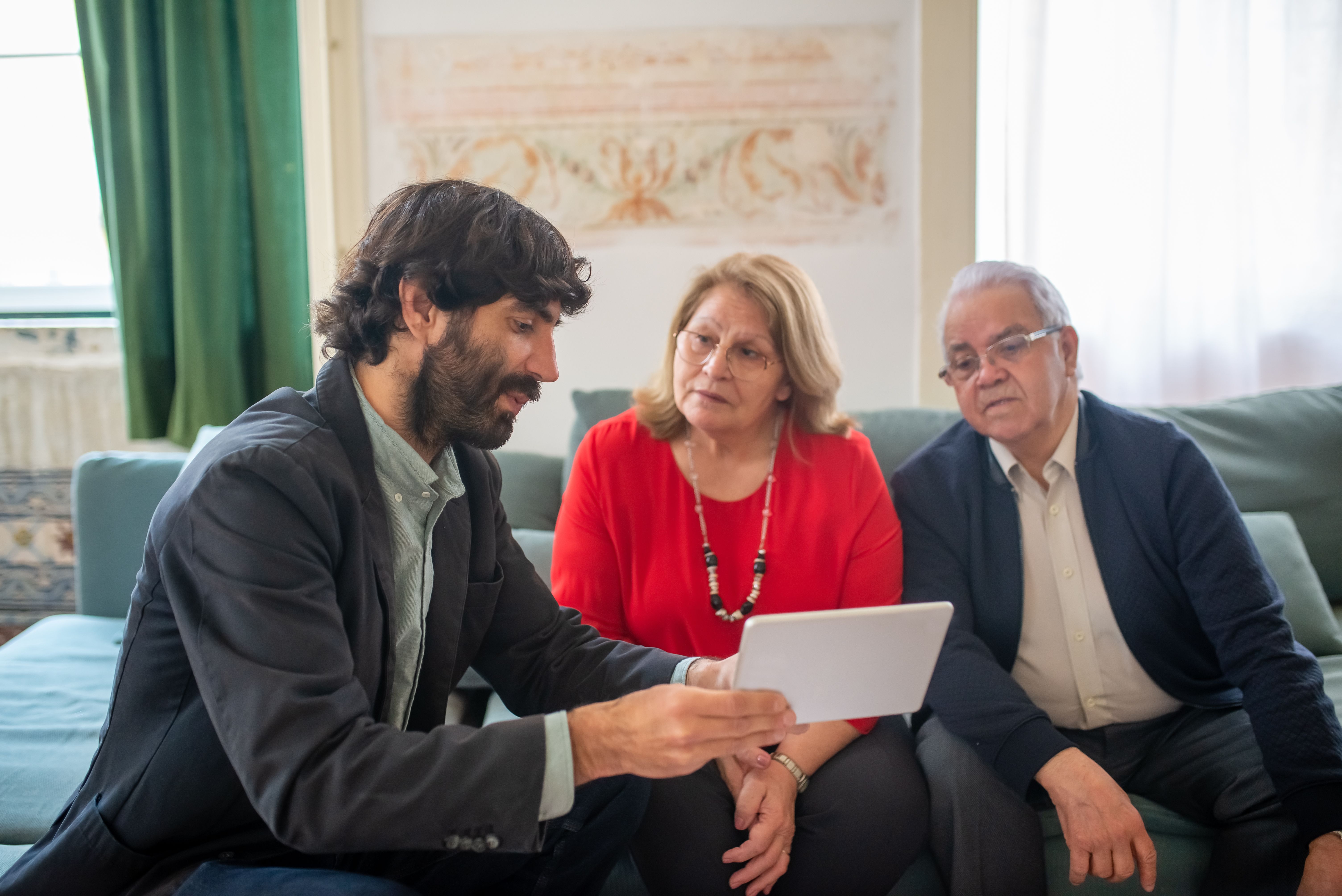
They listen more than they talk. A truly authentic adviser enters a conversation curious rather than convinced. They let the client finish, ask questions that dig beneath the surface, and resist the urge to fill silence with features and benefits. Listening is itself a form of respect, and respect is the foundation of trust.
They admit what they do not know. Nothing builds credibility faster than the words “I am not sure, but I will find out for you.” Pretending to have every answer might win an argument in the moment, but it loses the war the day your bluff is called. Clients do not expect perfection; they expect honesty about limits.
They are transparent about incentives. Whether you earn a commission, a fee, or a referral bonus, hiding it is a time bomb. Stating it plainly – even when it costs you a short-term advantage – signals that your advice can be trusted because you have nothing to hide.
They own their mistakes. Everyone errs eventually. The authentic professional does not deflect, blame, or bury the issue. They acknowledge it, fix it, and explain how it will not happen again. Paradoxically, a well-handled failure often strengthens a relationship more than a string of easy successes ever could.
Where Authenticity Becomes a Competitive Moat
In crowded markets, differentiation is hard. Competitors copy your pricing, your process, and your branding within weeks. What they cannot copy is the specific, irreducible person you bring to the table – your voice, your history, your judgement, and your way of relating to people. Authenticity is the one asset nobody can replicate, which makes it the most durable competitive advantage you can own.
This is especially true in the most personal corners of the service economy, where discretion and emotional safety are part of the product itself. A client who needs to open up about something deeply private – whether that is their finances, their health, or the most intimate details of their life – is making themselves vulnerable. In those moments, a rehearsed persona feels like a locked door. Consider how a provider in a wholly one-to-one, chemistry-driven field like companionship runs her business: for someone such as Louisa, whose reputation is built entirely on how clients experience her presence, being genuinely herself is not a marketing strategy – it is the product. The moment she performed a role instead of connecting as a person, the trust that keeps clients returning would evaporate. That is authenticity operating at its most literal, and it is a lesson every trust-based business can borrow.

The Long Game: Retention, Referrals, and Lifetime Value
It is tempting to judge sales success by what happens in the first meeting, but trust-based industries are won in the second, third, and tenth. A transactionally minded seller optimises for the close; an authentic one optimises for the relationship. The numbers end up favouring the latter. Research consistently shows that acquiring a new client costs many times more than keeping an existing one, and that loyal clients refer at rates no advertising budget can match. Every extra year a client stays is a year of compounding revenue – plus the word-of-mouth engine they power for free.
Authenticity also protects you in difficult moments. Markets crash, treatments fail, deals fall through. When trouble hits, clients do not flee the person who was honest with them from the start; they cling to them. The trust you built when times were easy is the only thing standing between you and panic when times are hard.
How to Cultivate More Authenticity Today
If you suspect your sales approach has drifted into performance, you can course-correct without a grand personality overhaul. Start small: prepare questions instead of a script, and let the prospect do sixty percent of the talking. Audit your own language for filler phrases you do not really mean and retire them. Schedule honest conversations about pricing and conflicts before the client has to ask. And build a feedback loop – ask recent clients what made them trust you, then do more of exactly that.
Perhaps most importantly, stop treating authenticity as a technique to be deployed and start treating it as a baseline to return to. Techniques are things you switch on; authenticity is what remains when you switch everything off.

Trust Is the Only Forecast That Matters
In transactional markets, the best salesperson is the one who closes the most deals. In trust-based industries, the best salesperson is the one clients recommend to the people they love – and that only happens when those clients feel they were never being sold to at all. Authenticity is not the soft option or the fallback for those who cannot master the hard sell. It is the ultimate sales tool precisely because it makes the sale feel like the natural conclusion of a genuine relationship. When trust is the product, being yourself is not just good ethics. It is the sharpest competitive edge you will ever hold.