
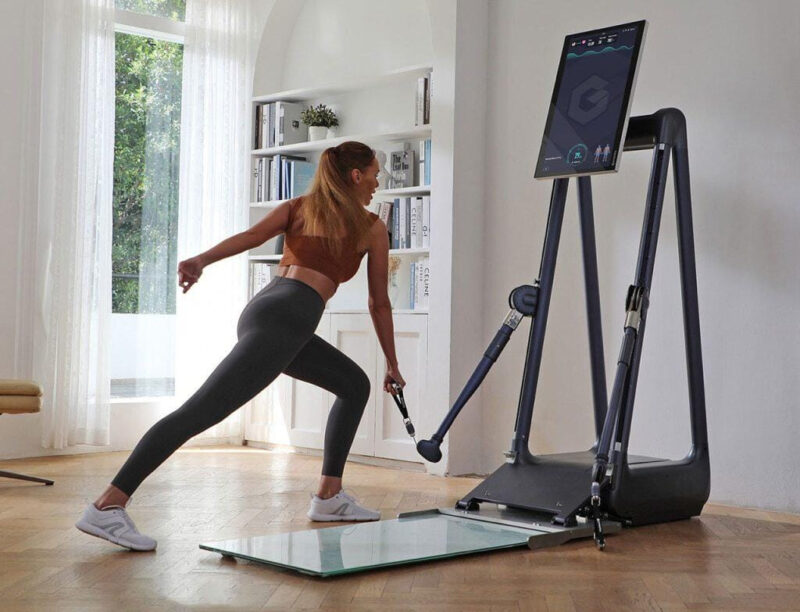
Walk into a modern gym today and you’ll notice something different almost immediately. Screens are everywhere. They sit above squat racks, guide group classes, display timers during circuits, and even help members track performance in real time. A few years ago, many gyms relied on whiteboards and shouted instructions. Now, workout displays have become part of the coaching experience itself.
That shift is not just about technology looking impressive. Good display systems actually change how coaches teach and how members learn. When people can clearly see workouts, timers, movement demos, and progress data, the entire session flows better. Coaches spend less time repeating directions and more time helping members improve form, intensity, and consistency.
Screens reduce confusion during group training

Group fitness sessions move quickly. One missed instruction can throw off half the room. Workout displays help eliminate that issue because members can glance up and instantly know what comes next.
That sounds simple, but it changes the atmosphere of a class more than most people expect. Instead of stopping the workout to ask questions, participants stay focused and moving.
Coaches can circulate through the room correcting technique rather than managing logistics.
A lot of gyms now structure displays around three core functions:
- Timers and interval pacing
- Exercise demonstrations
- Workout structure and station rotation
That combination keeps classes smoother and more organized, especially during HIIT, circuit training, and functional fitness sessions.
Many modern training systems now integrate concepts like workout display systems, allowing coaches to guide members toward specific intensity levels based on real time feedback instead of guesswork. Members can instantly see whether they should push harder or recover more efficiently during a workout.
Digital workout systems often free coaches from repetitive instruction so they can spend more time on form correction and motivation.
You can actually feel the difference in classes that use screens effectively. There is less downtime, fewer awkward pauses, and a stronger sense of momentum throughout the workout.
Better coaching happens when trainers are not stuck managing the clock
One underrated problem in coaching is mental overload. Trainers are often juggling timers, counting reps, explaining movements, checking safety, and motivating members all at once. Screens remove part of that burden.
Instead of yelling countdowns every thirty seconds, coaches can focus on the people in front of them. That leads to more individual feedback and better movement quality during sessions.
Here’s where screens help coaches most:
| Coaching Challenge | How Displays Help |
| Repeating instructions constantly | Exercises stay visible throughout the session |
| Losing track of intervals | Built in timers manage pacing automatically |
| Members forgetting movement order | Rotations remain displayed on screen |
| Beginners feeling overwhelmed | Exercise demos reduce uncertainty |
| Coaches stuck at whiteboards | More time spent interacting with members |
After introducing displays, many gyms report smoother transitions between stations and more consistent class experiences.
That consistency matters because members remember how a class feels. A session that runs cleanly feels more professional and more motivating, even if most people never consciously realize why.
Real time feedback keeps members more engaged
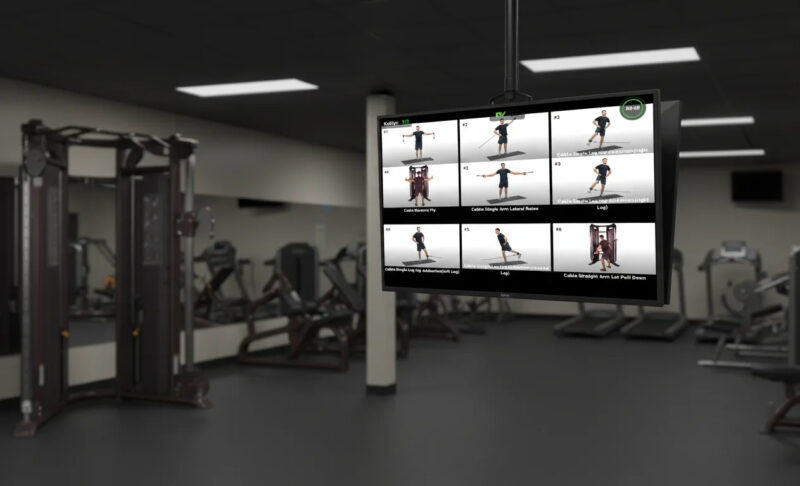
People stay motivated when they can see progress. That is one reason fitness watches and wearable trackers became so popular. Gym displays build on that same idea by making performance visible during workouts.
Some systems show live heart rate data, calorie estimates, pace targets, or leaderboard rankings. Others highlight completed rounds or time remaining in a workout. Small visual cues like that help members stay mentally connected to the session.
Interestingly, screens also help quieter members who normally avoid asking questions. Instead of feeling lost, they can follow visual prompts independently.
Did you know?
Some fitness centers now integrate digital displays with member tracking systems that personalize workout suggestions and performance metrics in real time.
That personalization creates a stronger sense of ownership over training. People feel less like passive participants and more like active contributors to their own progress.
Displays also improve the atmosphere of the gym
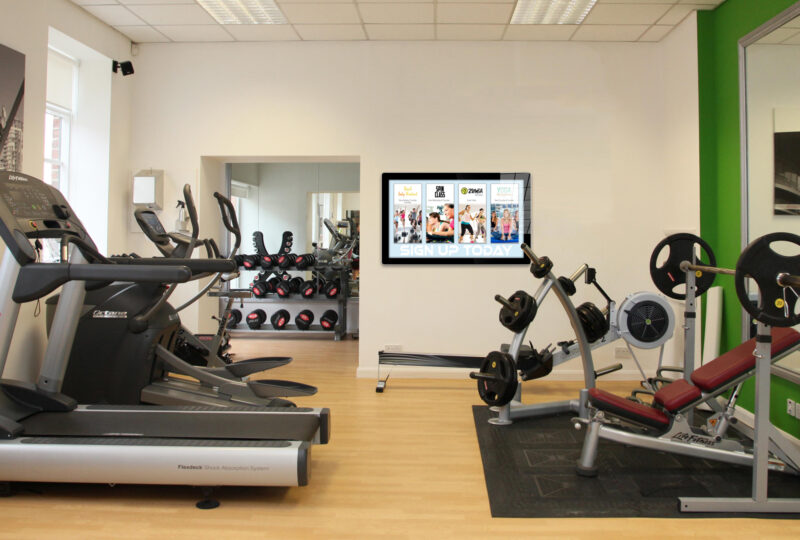
A blank wall with peeling posters creates a completely different energy compared to a clean display showing class schedules, motivational content, and live workout data. Screens make gyms feel active and current without requiring huge renovations.
Some facilities use displays to rotate:
- Upcoming class schedules
- Coaching tips
- Member milestones
- Recovery reminders
- Live sporting events
- Nutrition guidance
That constant movement keeps the environment visually alive. Reports from fitness industry providers suggest digital signage can improve member retention partly because it strengthens the overall gym experience.
The key is balance, though. Too many screens or overly flashy graphics can become distracting. The best gyms use displays to support training, not dominate attention.
Smaller gyms can benefit just as much as large facilities
There is a common assumption that workout display systems are only useful for huge commercial gyms. That really is not true anymore.
Even a small studio with one strategically placed screen can improve session structure. Boutique fitness spaces often benefit the most because classes are usually built around timed intervals and guided coaching.
A single display can help:
- Keep classes on schedule
- Reduce setup confusion
- Create a more polished feel
- Support newer coaches
- Make workouts easier to follow
Industry sources also note that smaller gyms do not need massive installations to improve the member experience through smart displays.
Screens should support coaching, not replace it
Screens are useful, but they are not the coach. Members still need human interaction, correction, encouragement, and accountability.
The best gyms understand that displays are tools that enhance communication rather than automate the entire experience. Nobody joins a gym because they want to stare at another screen all day. They join because they want guidance, structure, and motivation.
Good coaches use displays to remove friction from the workout so they can focus on what actually matters. Helping members move safely. Pushing people when effort drops. Building confidence. Creating community.
That human side is still the center of effective coaching. The technology simply gives trainers more room to do it well.